
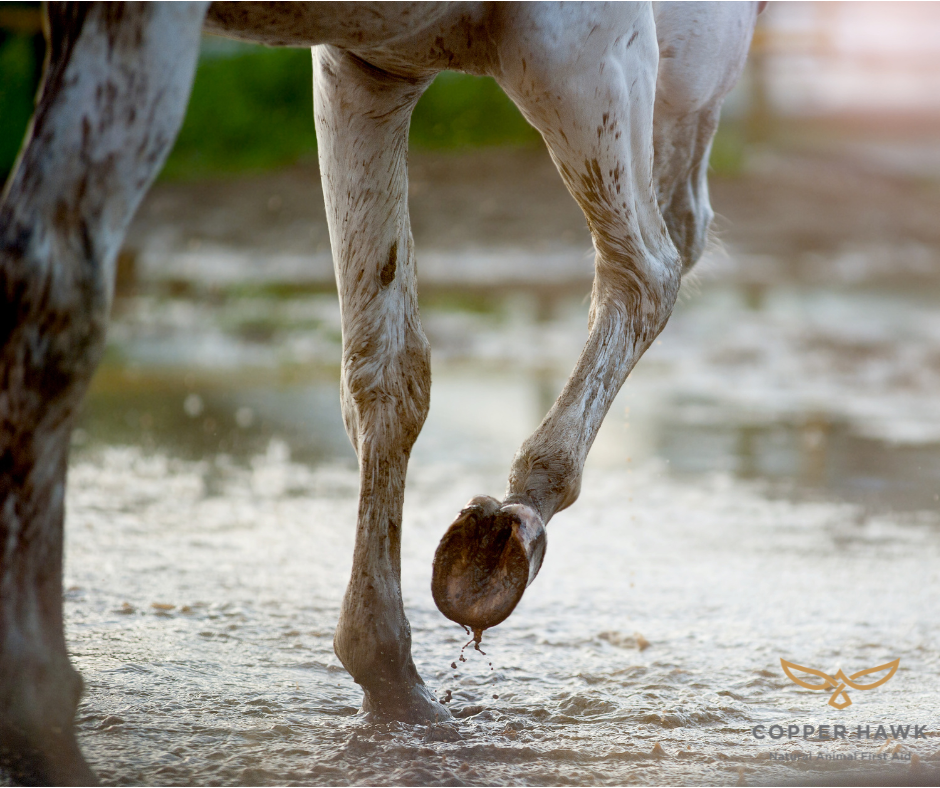
Mud season is part of horse ownership.
But what many owners call “mud rash” is not simply about mud. It is about skin under environmental stress. When prolonged wet conditions soften the outer layer of the skin, its natural protective barrier becomes compromised. Once that barrier weakens, sensitivity and irritation can follow , especially on the lower legs. Understanding what is happening beneath the surface helps you manage it more effectively.
What Is Commonly Called “Mud Rash”?
Mud rash (often referred to as mud fever or pastern dermatitis) typically appears on the lower legs, especially around the heel and pastern area. You may notice:
- Red or irritated skin
- Scabbing or crusting
- Sensitivity when touched
- Areas where hair thins
While it can look alarming, it usually begins with one simple issue: Moisture imbalance affecting the skin barrier.
Why Wet Conditions Weaken Skin Resilience
Healthy equine skin functions as a protective shield. Its role is to Regulate moisture, defend against environmental stress, Maintain structural integrity. However, when horses stand in wet paddocks or muddy gateways for extended periods: The outer skin layer softens, Natural oils are disrupted, Friction increases and the protective barrier becomes less effective. Repeated exposure without adequate drying or protection can reduce skin resilience over time. This is why mud season is challenging, not because of mud alone, but because of constant moisture exposure.
Common Mistakes That Can Worsen the Situation
Well-intentioned care can sometimes increase stress on already sensitive skin. Avoid aggressive scrubbing, over-washing with harsh cleansers, removing scabs prematurely, leaving legs damp after cleaning, and using products that overly dry the skin. Compromised skin requires support, not stripping.
A Smarter Seasonal Routine : Rather than reacting when irritation appears, adopt a barrier-first approach.
Step 1: Gentle Cleaning
Remove mud carefully without disrupting the surface layer.
Step 2: Thorough Drying
Moisture retention weakens barrier function. Pat dry fully.
Step 3: Support & Protect
Apply a protective dermal layer to help maintain the natural skin barrier during continued wet exposure.
Step 4: Stay Consistent
Routine maintenance is more effective than occasional intensive intervention. Prevention is not about doing more. It’s about doing the right things consistently.
Where Copper Hawk Fits
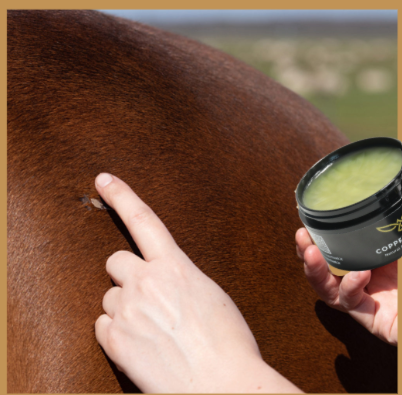
Copper Hawk is a dermal care solution designed to support animal skin exposed to challenging environmental conditions. During muddy seasons, it can be integrated into a routine as:
- A skin barrier layer
- Support for stressed or sensitive skin
- A moisture-shielding addition to grooming
- A proactive component of yard management
Copper Hawk is not a medicinal product.
It is formulated to help maintain and support skin integrity when conditions place increased stress on the barrier.
Key benefits within a compliant framework:
✔ Supports skin resilience
✔ Helps maintain natural barrier function
✔ Suitable for repeated use
✔ Designed for cross-species dermal care
When used consistently as part of a routine, it helps the skin remain better supported during prolonged wet exposure.
Prevention Is Easier Than Reaction
The most successful yards don’t wait for visible irritation. They prepare for the season by prioritising Cleanliness, Complete drying, Barrier support and Consistency. You reduce environmental stress on the skin and improve overall resilience during wet months.
Mud Season Management Starts Now
If wet conditions are part of your horse’s routine, barrier support should be too. Copper Hawk can be used proactively throughout muddy seasons as part of a structured skin care approach.
Find your nearest stockist or integrate it into your yard routine today.